When the Attackers Already Have the Keys
It’s 3 AM when your phone erupts with alerts. Your security team has detected suspicious lateral movement across the network, but something’s wrong. The attacker isn’t breaking in through a vulnerability or exploiting a zero-day. They’re logging in with valid credentials, moving through systems with legitimate access tokens, and your SIEM is showing nothing unusual because every authentication looks normal. By the time you realize what’s happening, they’ve already been inside for three weeks.
This is the modern security nightmare that keeps CISOs awake at night. Traditional security architectures assume attackers operate outside the organization while defenders operate inside, with a clear boundary between the two. But that boundary has evaporated. Modern breaches don’t begin with malware or sophisticated exploitation. They begin with a valid login.
The challenge is no longer keeping attackers out. It’s preventing legitimate access from becoming unrestricted control. This is where Zero Trust architecture has moved from theoretical security model to structural requirement for organizations operating at scale.
The Invisible Attack Surface: Logging Gaps That Cost Millions
The statistics are sobering. Seventy-five percent of identity attacks exploit logging gaps that security teams never even knew existed. When organizations lack complete visibility into authentication events, privilege escalations, and access patterns, attackers can operate undetected for weeks or months. The IBM Digital Defense Report shows credential-based intrusions surged seventy-one percent year-over-year, with attackers exploiting valid logins to blend into normal activity. Without comprehensive telemetry, security teams are fighting blind.
|
Security Metric |
Impact |
|---|---|
| Identity Attacks Exploiting Logging Gaps | 75% |
| Credential-Based Intrusions Year-over-Year Increase | 71% |
| Organizations Ignoring Critical Data Sources Due to Cost | 67% |
The cost isn’t just in breach response. Organizations admit to ignoring critical data sources because of high ingestion costs and complexity. That’s sixty-seven percent of security teams making impossible choices between full coverage and budget limitations. Traditional SIEM architectures charge by data volume, meaning every gigabyte of logs adds to the bill whether it provides detection value or not.
High-volume sources like CloudTrail can generate two hundred gigabytes per day in mid-sized environments. At four to five dollars per gigabyte, that’s thirty to sixty thousand dollars per month just for ingestion. Teams face a brutal choice: cut data sources and accept blind spots, or watch costs spiral out of control.
Why Traditional Pipelines Fail Under Pressure
Traditional log management architectures weren’t built for the scale and complexity of modern cloud-native environments. The “ingest everything” approach made sense when data volumes were manageable and threats were simpler. But today’s hybrid and multi-cloud infrastructures generate exponential telemetry growth. Every new service, every API call, every authentication event adds to the flood. The problem compounds when organizations try to optimize. Sampling strategies seem logical until you realize that one malicious API call buried in a thousand benign operations gets sampled out. The breach goes undetected for weeks. Index-time filtering reduces storage costs but the ingestion meter has already ticked. You’re still paying to ingest everything before moving it to cheaper storage.
Manual data collection and processing efforts consume fifty-three percent of security teams’ time. Instead of hunting threats and investigating incidents, engineers are managing pipelines, tuning parsers, and fighting with data formats. Every new log source requires custom configuration. Schema changes break ingestion. Alert fatigue from noisy logs drowns out real signals. Meanwhile, data volumes grow twenty to thirty percent annually while budgets stay flat. Security teams want full-fidelity data for investigations and compliance, but CFOs are asking why you’re paying premium rates for logs that sit in cold storage. The core issue is that operational logs account for sixty to ninety percent of total volume but provide minimal detection value. The traditional approach optimizes for the wrong metric.
Enter DataStream: Security Telemetry Built for Reality
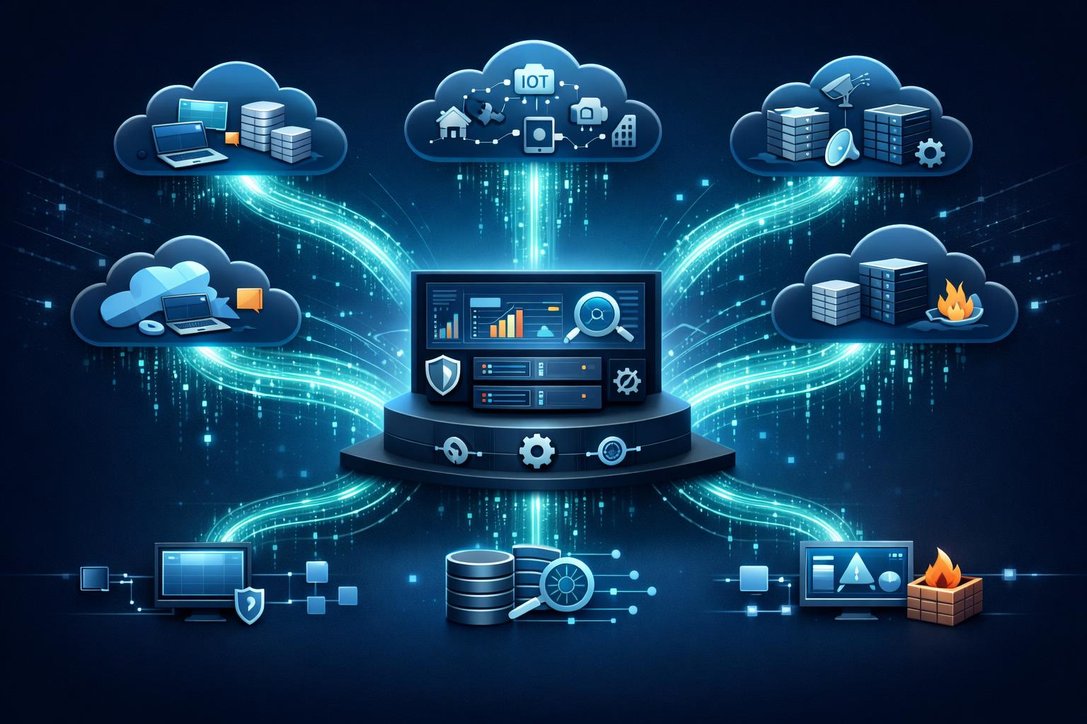
DataStream takes a fundamentally different approach. Instead of fighting the pricing model by ingesting less data, it changes the relationship between data volume and cost. The platform acts as an intelligent processing layer between your telemetry sources and security destinations, making real-time decisions about what data goes where based on detection value, investigation needs, and compliance requirements.
The architecture starts with agentless data collection. DataStream gathers telemetry from servers, applications, network devices, and endpoints without requiring local agents to be installed and managed. This eliminates the deployment and maintenance overhead that consumes engineering time. The platform automatically discovers new sources and begins collection, typically reaching production readiness in under thirty minutes.
Once data is collected, DataStream applies security-aware optimization. Unlike generic ETL tools that blindly filter logs, DataStream uses attacker-aware logic to distinguish between actionable signals and repetitive noise. The system understands which fields are required for specific detection rules and investigation workflows. It preserves detection-relevant content while removing unnecessary fields and duplicate events. Organizations using DataStream typically experience fifty to ninety percent reduction in data volume ingested into SIEM without sacrificing detection fidelity.
The secret is intelligent routing. High-priority, detection-relevant data flows to Microsoft Sentinel for real-time analysis. High-volume, investigation-and-compliance data routes to Azure Data Explorer or Azure Blob Storage at significantly lower cost. The telemetry isn’t discarded; it’s stored in the right destination for its purpose.
The Performance Numbers That Change Everything
The performance characteristics of DataStream fundamentally alter what’s possible in security operations. The platform processes logs at ten times the speed of traditional pipelines using a vectorized pipeline engine built for high-throughput performance. This isn’t just about faster ingestion; it’s about reducing the time from event occurrence to detection and response. When incidents happen, every minute matters.
DataStream Performance Improvements
| Performance Metric | Improvement |
|---|---|
| Log Processing Speed | 10x faster than traditional pipelines |
| Data Compression | 99% compression achieved |
| SIEM Ingestion Volume Reduction | 50-90% reduction |
| Incident Response Time | 4x faster with complete log collection |
| Manual Processing Effort | 25-75% reduction |
DataStream achieves up to ninety-nine percent compression through intelligent deduplication and field reduction. Write-ahead log architecture guarantees reliability and prevents data loss even during system disruptions. The result is that organizations cut manual data collection and processing efforts by twenty-five to seventy-five percent, reclaiming engineering time for strategic security initiatives instead of pipeline maintenance.
Perhaps most importantly, DataStream delivers four times faster incident response with complete log collection. Security teams gain visibility into authentication events, privilege changes, and access patterns that were previously hidden by cost constraints. The platform supports over two hundred log sources and multiple schema formats including ASIM, CIM, ECS, OCSF, UDM, and CSL, ensuring compatibility with diverse security ecosystems.
For Microsoft Sentinel users, the integration is seamless. DataStream automatically converts logs into CommonSecurityLog and ASIM-compliant formats, enriches data with threat intelligence context, and routes according to policies defined by security teams.
Real-World Outcomes: When Theory Meets Practice
The transformation isn’t just in the metrics; it’s in what security teams can actually accomplish. Organizations deploying DataStream report fundamental shifts in their security posture and operational efficiency.
Comprehensive Visibility Without Cost Anxiety
Teams finally achieve comprehensive visibility without cost anxiety. The fifty to ninety percent ingest reduction translates directly to budget savings that can be reinvested in high-fidelity sources like EDR and identity monitoring that were previously skipped due to cost concerns.
Detection Quality Improves Rather Than Degrades
Security-aware optimization means the exact fields required for detection rules and threat hunting are preserved even as overall volume decreases. Alert fatigue drops as noisy, low-value logs are filtered upstream. Analysts focus on investigating real threats instead of dismissing false positives.
Incident Response Accelerates Dramatically
With complete log collection and four times faster processing, security teams detect lateral movement, privilege escalations, and data exfiltration attempts in hours instead of days or weeks. The seventy-five percent of identity attacks that exploit logging gaps become visible and stoppable.
Engineering Teams Reclaim Time for Innovation
Automated log normalization eliminates weeks of parser development. Agentless collection removes deployment and maintenance burden. The twenty-five to seventy-five percent reduction in manual effort means engineers can focus on building detections, improving playbooks, and hardening environments instead of fighting with data pipelines.
Compliance Becomes Simpler
DataStream routes full-fidelity logs to cost-effective long-term storage for regulatory retention requirements while sending only detection-relevant data to expensive SIEM tiers. Organizations satisfy audit requirements without paying premium rates for cold storage.
The Automation Advantage: Why Manual Configuration Loses
The competitive edge isn’t just about cost or performance; it’s about adaptability. Manual pipeline configuration creates fragility. Every new log source requires custom development. Schema changes break parsers. Security teams spend days or weeks onboarding new data sources, during which time they lack visibility into those systems. Attackers don’t wait for pipeline projects to complete.
DataStream’s automated approach changes the equation. The platform includes pre-built integrations for over two hundred sources with automatic schema detection and normalization. When log formats change, DataStream detects the schema drift and adapts without manual intervention. New sources reach production in under thirty minutes instead of weeks.
The automation extends to optimization decisions. Security teams define policies once, specifying detection priorities, compliance requirements, and cost targets. DataStream continuously evaluates incoming telemetry against those policies, making routing and filtering decisions in real-time. As data volumes grow or new threats emerge, the platform adapts without requiring constant tuning.
This architectural difference compounds over time. Organizations with manual pipelines find themselves falling further behind as complexity grows. Every new cloud service, every merger integration, every security tool adds to the maintenance burden. Teams with automated platforms like DataStream scale linearly, maintaining consistent security coverage and cost efficiency regardless of infrastructure growth.
“The question isn’t whether to adopt intelligent telemetry pipelines. It’s whether your organization can afford the blind spots and inefficiency of legacy approaches while competitors gain comprehensive visibility at a fraction of the cost.”